How Clinics Can Reduce Patient Waiting Times Without Hiring More Staff
April 2, 2026 by Nick
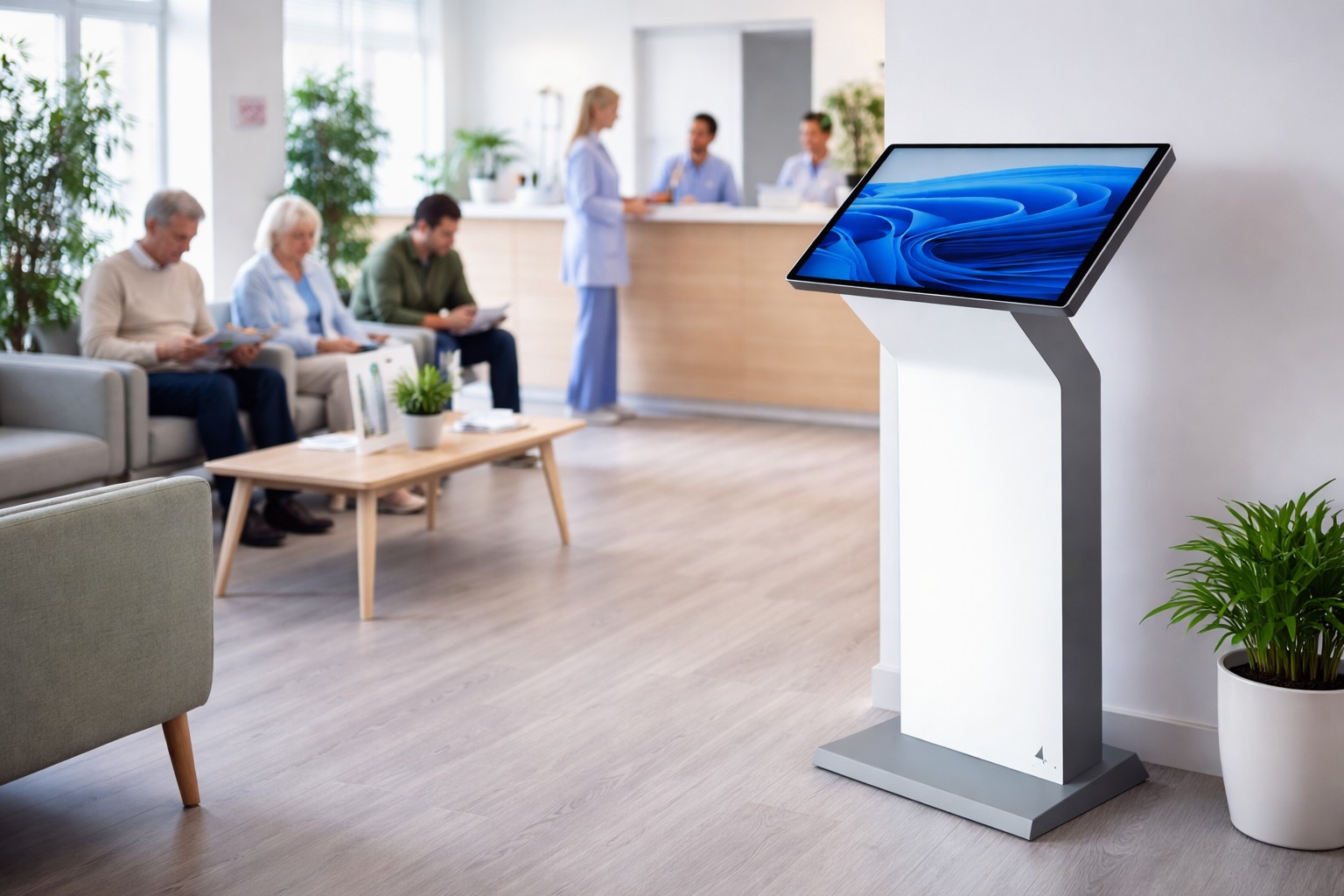
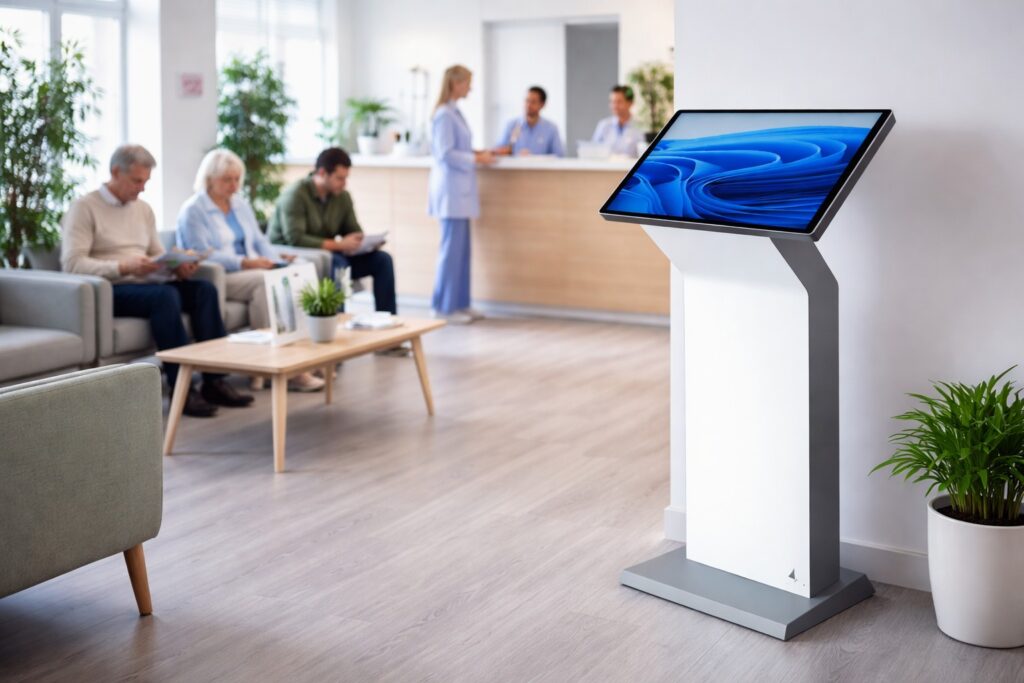
Walk into almost any busy GP surgery or clinic at peak time and you’ll see the same thing: a full waiting room, a queue forming at reception, phones ringing, and staff doing their best to keep everything moving. It’s not that clinics are poorly run – it’s that demand has quietly outgrown the systems in place.
And the usual solution? Hire more staff.
But that’s not always realistic. Budgets are tight, space is limited, and training takes time. So the real question becomes: how do you handle more patients, more efficiently, without increasing headcount?
The bottleneck isn’t what you think
Most clinics assume the problem is “too many patients.” In reality, it’s often how patients are processed when they arrive.
Think about what happens during a typical check-in:
- The patient queues
- They state their name, sometimes spelling it out
- The receptionist searches the system
- Details are confirmed (sometimes multiple times)
- Additional questions or forms come up
Now multiply that by dozens – or hundreds – of patients a day.
It doesn’t take much for delays to build up. One complicated case, one phone call at the wrong moment, and suddenly the queue starts growing.
Small delays compound quickly
A 60-second delay per patient doesn’t sound like much. But across 50 patients, that’s nearly an hour of lost time.
And it’s not just about time – it’s about pressure. Reception staff are forced to multitask constantly, patients become frustrated before they’ve even been seen, and the whole atmosphere of the clinic shifts.
You can feel it in the room.
Rethinking the arrival experience
Now imagine a slightly different scenario.
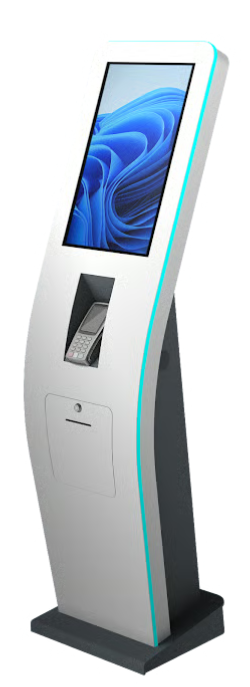
A patient walks in. Instead of heading straight for a queue, they go to a self check-in kiosk. They tap their name or enter a few details. They confirm their appointment. Done – in seconds.
No queue. No interruption. No pressure on staff.
Meanwhile, reception can focus on the patients who actually need help – elderly patients, complex queries, or anything out of the ordinary.
This isn’t about replacing people. It’s about removing unnecessary friction.
Why this works better in practice
What’s interesting is how quickly this changes the flow of a clinic.
The simple, repetitive tasks – the ones that slow everything down – are handled instantly. Patients who are comfortable with technology move through the system without needing assistance. And for those who aren’t, staff are more available to help.
It creates a kind of natural balance:
- straightforward check-ins happen quickly
- complex cases get proper attention
- queues reduce without forcing anyone into a rigid system
And importantly, it doesn’t feel clinical or cold. In many cases, it actually improves the patient experience. There’s less waiting, less awkwardness at the desk, and more privacy.
It’s not just about speed
One of the biggest misconceptions is that this is purely about efficiency.
In reality, it’s also about capacity.
When your reception process becomes faster and smoother, you’re effectively increasing how many patients your clinic can handle in a day – without changing your team size.
That’s a powerful shift.
It also reduces burnout. Reception staff are no longer stuck in a constant loop of repetitive tasks and interruptions. They can focus on meaningful interactions instead of firefighting.
What about older patients?
This is usually the first concern – and a fair one.
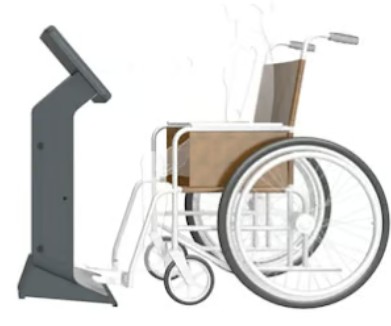
But in practice, most clinics find that adoption happens naturally. Many patients are already used to touchscreens from supermarkets, banks, and transport systems. And for those who prefer not to use them, the traditional reception option is still there.
That’s why the hybrid model works best.
You’re not forcing change – you’re offering a better option for those who want it.
A quiet upgrade with a big impact
The interesting thing about reducing waiting times is that it doesn’t require a dramatic overhaul. You don’t need to expand your premises or hire more staff. You don’t need to completely change how your clinic operates.
Sometimes, the biggest improvements come from fixing the smallest bottlenecks.
And in many clinics, the front desk is exactly that.
If you look at it from the outside, a self check-in kiosk might seem like a simple addition. But in reality, it reshapes how patients flow through your space – from the moment they walk in.
Less waiting. Less pressure. A smoother day for everyone involved.
And that’s something both staff and patients notice almost immediately.
Written by

Nick
You may also interested in:

How Much Does a Self-Service Kiosk Actually Save?
For many businesses considering automation, the first question is simple: does a self-service kiosk actually save money? The short answer is yes – often far more than expected. But the
Contactless Hospitality:
Why Modern Guests Prefer Self Check-In
The hospitality industry has changed dramatically in the last few years. Guest expectations have evolved. Technology has matured. Labour costs have risen. And the demand for speed, convenience and privacy
What to Look for When Choosing a Business Kiosk
(Avoid These Costly Mistakes) When businesses choose a kiosk, the decision often starts with hardware: screen size, price, specifications. That approach is where most mistakes begin. In reality, the success
The Hidden ROI of Self-Service Kiosks
What Most Businesses Don’t Calculate When businesses assess self-service kiosks, the calculation is usually simple: hardware cost vs. staff savings. That view misses the bigger picture. In reality, most of
Enduring Customer satisfaction needs kiosk technology PLUS the human connection
Self-service kiosks for increasingly complex tasks need the human support to aid the customer where needed. Great customer satisfaction will only be achieved with the speed of the kiosk and
The Silent takeover of everyday spaces
An exposé of how, where and why touchscreen kiosks are and will increasingly be found in every part of life The Silent Takeover of Everyday Spaces In airports, restaurants, shopping
Getting value!
Maximise the Return on Your Self-Service Kiosks Most self-service kiosks are installed with a clear purpose—to deliver a specific service efficiently and with scale. To help users identify that purpose,
Customer Happiness is the New Currency of Business
Today, using self service kiosks to provide quality and reliable services is a key part of creating happy customers that keep returning. Happiness in today’s marketplaces is often measured by
Grumpy people with self service technology
How to ensure your self-service kiosk solution is favoured by all who use it… Self service technology has been around us for decades and has been accepted well in simple