Beyond the Clipboard: Why Modern Clinics Are Moving to Self-Service Patient Intake
August 11, 2026 by Nick
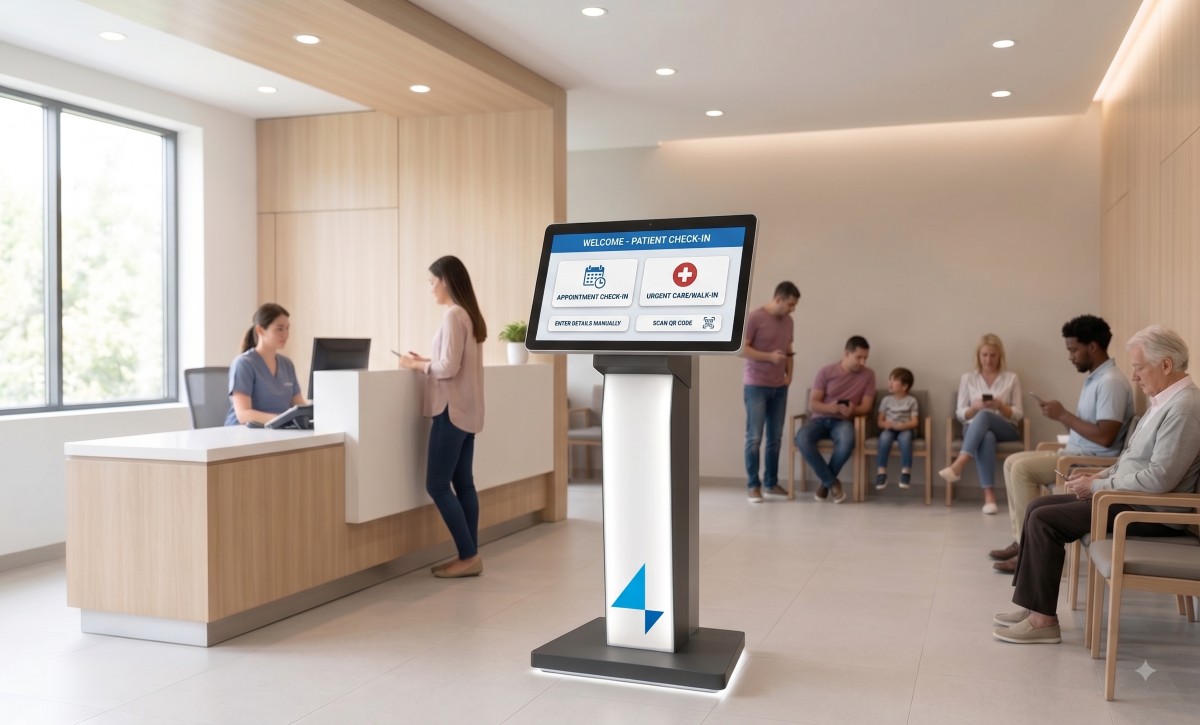
Every morning in busy medical practices and outpatient centers, the same scenario plays out: patients queue at the front desk, balancing clipboards, insurance cards, and pens, while administrative staff manually re-enter handwritten details into the Electronic Health Record (EHR). This manual friction causes check-in delays, human data entry errors, and significant administrative burnout.
Transitioning to automated self-service intake kiosks addresses these operational bottlenecks directly, modernizing the patient journey while safeguarding practice revenue.
Eliminating Waiting Room Congestion
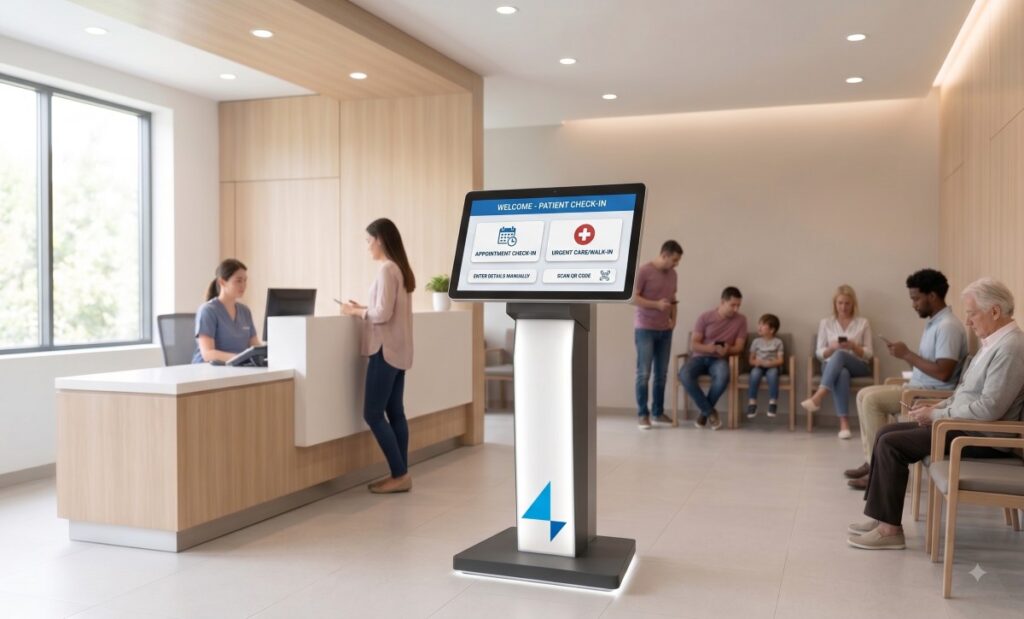
Traditional paper check-in processes average 7 to 10 minutes per patient, creating bottlenecks in reception areas during peak hours and throwing provider schedules off track. Interactive check-in kiosks reduce this timeframe to under 90 seconds. Returning patients can simply scan a barcode, QR code, or ID, confirm their demographics, update insurance policies, and sign mandatory consent forms directly on screen before taking a seat.
Improving EHR Data Precision and Billing Accuracy
Handwritten intake forms are a primary source of illegible handwriting, mistyped policy numbers, and missed mandatory fields—all frequent culprits behind delayed claims, billing rejections, and unpaid balances. Touchscreen kiosks capture patient data digitally at the source. Built-in input validation ensures complete, error-free form submissions that sync seamlessly into your practice management software, completely eliminating redundant double-handling by front-desk teams.
Enhancing Patient Privacy and On-Site Hygiene
Verbal check-in processes frequently require patients to speak personal details, birth dates, and contact information out loud within earshot of a full waiting area. Dedicated self-service terminals provide a private, discreet interface that protects patient information and maintains strict compliance with privacy standards. Furthermore, purpose-built healthcare terminals utilize commercial-grade antimicrobial glass touchscreens and smooth, IP-rated enclosure designs that staff can easily sanitize between visits.
Refocusing Staff on High-Value Patient Care
When administrative staff spend less time scanning physical papers and manually typing details into databases, they can pivot to what matters most: delivering attentive patient support, managing complex care coordination, and maintaining a welcoming clinical atmosphere.
Upgrading to an automated intake workflow is more than just a digital facelift—it is a high-return operational upgrade that accelerates throughput, protects cash flow, and sets a modern, professional tone from the moment a patient steps through your doors.
Written by

Nick
You may also interested in:
Every Second Counts: How K4B Visitor Management Kiosks Deliver One-Click Emergency Evacuation Lists
When an emergency alarm sounds in a busy facility, the most critical question appointed fire marshals face is immediate and urgent: Who is currently in the building? While permanent staff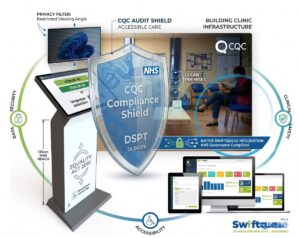
The Zero-Risk Clinic: Swiftqueue-Integrated Kiosks Solve the NHS Compliance Minefield
Self service automation is no longer a luxury for UK blood, radiology and other test clinics – its a fundamental necessity. With patient numbers rising clinic and practice managers need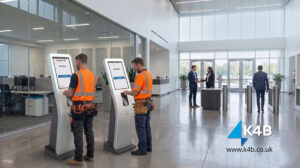
How the Right Visitor Management Kiosk Creates Unexpected Business Value
In a busy office block, factory, conference centre, hospital etc. managing the people coming into the building is a significant task. Before the K4B Visitlog solution, a delegation of receptionists
The Digital Triage: Why Integrated Self-Service Kiosks are the Future of Medical Administration
In the high-stakes environment of modern healthcare, the reception desk is often the primary point of friction. Between emergency admissions, scheduled consultations, and a steady stream of pharmaceutical representatives and
How Clinics Can Reduce Patient Waiting Times Without Hiring More Staff
Walk into almost any busy GP surgery or clinic at peak time and you’ll see the same thing: a full waiting room, a queue forming at reception, phones ringing, and
How Much Does a Self-Service Kiosk Actually Save?
For many businesses considering automation, the first question is simple: does a self-service kiosk actually save money? The short answer is yes – often far more than expected. But the
Contactless Hospitality:
Why Modern Guests Prefer Self Check-In
The hospitality industry has changed dramatically in the last few years. Guest expectations have evolved. Technology has matured. Labour costs have risen. And the demand for speed, convenience and privacy
What to Look for When Choosing a Business Kiosk
(Avoid These Costly Mistakes) When businesses choose a kiosk, the decision often starts with hardware: screen size, price, specifications. That approach is where most mistakes begin. In reality, the success
The Hidden ROI of Self-Service Kiosks
What Most Businesses Don’t Calculate When businesses assess self-service kiosks, the calculation is usually simple: hardware cost vs. staff savings. That view misses the bigger picture. In reality, most of